
Shop

LAMENTING SIRENS by Richard Otwao
January 6, 2021
THE SAVANNAH KNOWS NO FRIENDS – Poems From 13 Ugandan High Schools
January 6, 2021


DECOUNTRYRIZED (I HAVE LEFT MY HOME IN YOUR MEMORY) by Acha Divine Patandjilla
UGX20,000
DECOUNTRYRIZED is a tale of a lonely African soul seeking refuge from war. Having left her country as a child in search for peace, Acha and her family eventually settled in Uganda and this is where Acha tells her story. The poems are a painful reminder of the effects of war on Africa’s children but the books also filly the reader with hope that someday peace shall be achieved and the writer and her family will be able to go back and settle home.
Excerpt
“Say goodbye to a refugee when you see them smile
That would be a dream from a thousand miles
Of peace promised by historically corrupted minds
Who never answer to Peace.
“Say goodbye to a refugee when you see them cry,
The guns and runs and bomb-blasts made their land dry;
Their hearts steady
Hard like stone,
Every tear a signal
Of dying faith
Every drop a hope gone
“Home is fairytale
Home is hell
Home is hot enough.”
-SAY GOODBYE
Author
ACHA DIVINE PATANDJILA LERATO is Congolese national born in 2000 in South Africa. In 2015 her family sought refuge in Uganda because of insecurities back in DRC. In 2018, alongside her friends, she helped to initiate the Greenhill Academy Poetry Club where students would gather every Thursday afternoon and share poetry. By the end of 2018 she joined VERSE IN VAC, a poetry program run by Kitara Nation that focuses on developing theatre and written poetry. Under this program she was able to write and perform poetry in a number of theatre productions thus stepping out as a performance poet. This is her first poetry collection.
Video
Publishing Particulars of the Book
ISBN: 9-798654-863478
Format: Paperback & Kindle
Language: English
Number Of Pages: 68
Published: 2020
Publisher: Kitara Nation
Only logged in customers who have purchased this product may leave a review.
Related products
-
Add to cart
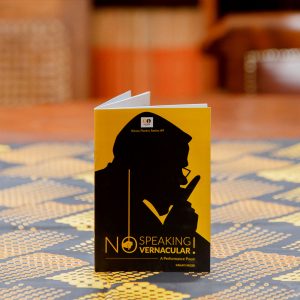
NO SPEAKING VERNACULAR by Kagayi Ngobi
UGX20,000“No speaking Vernacular was beautifully performed; humourous, witty, revealing. I thought the play clearly brought out the shortcomings of an education system that wholly demonizes the use of native languages in schools. No Speaking Vernacular pits Mr. Full stop, the John Speke High School Headteacher against Dambya, (Nsubuga Muhammad) a renegade vernacular speaker. Dambya’s sin is using the Luganda word ‘gwe’ which Mr Full stop considers an unforgivable breach of Article 23 of the school Regulations.
In punishment, Dambya suffers the minimum punishment prescribed by the regulations. He is caned. He is forced to wear old sisal sackcloth, a bone around his neck, and a placard bearing the words: “I am stupid. I speak Vernacular.”
– Herbert Okello Andrew, Lawyer, teacher.
-
Add to cart
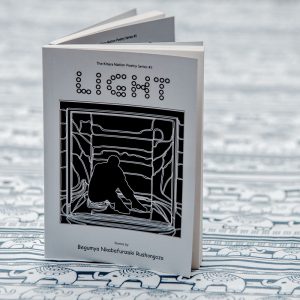
LIGHT by Begumya Nkabafunzaki Rushongoza
UGX30,000“I think of Rusho’s LIGHT as an act of taking the veil off the world; of the man he is, and that of the people around him. I am deliberate about calling it an act because it’s memory in motion. Each poem dances below a bulb at its own tempo and intent. Some of them seek it, the spot, while others avoid it so that the pains and injustices in their bodies aren’t seen. But a lot is on display still, even during moments of darkness. Questions about gender and the human body, loss, relationships, the country, self, and so on. I admire the bravery by which he writes about himself. What drives a man to speak about himself with such honesty? The only way to find out is by diving into the poems he presents as a mirror.
-Lule ssebo Lule, author of OGENDA WA?
-
Add to cart
LAMENTING SIRENS by Richard Otwao
UGX30,000“A nation turning into a mortuary” as an “experiment in human suffering”. This is an example of how powerful Richard Otwao’s poetry is: using deceptively simple diction and imagery, he vividly captures the tragedy that African countries have suffered in different situations of war, dictatorship, deprivation, disease, and insult, to mention but a few. With delicate irony and humour, he shows us that not all is lost, for if we mediate upon our deeds and will ourselves into loving our fellow human beings a little more, we can salvage something from the mess we have put our countries, and ourselves, into.”
-Dr Danson Sylvester Kahyana, Senior Lecturer in Literature, Makerere University

Reviews
There are no reviews yet.