
Shop

THE SAVANNAH KNOWS NO FRIENDS – Poems From 13 Ugandan High Schools
January 6, 2021
ONE DAY THE SUN WILL VISIT MY HOME by St. Joseph’s Girls Senior Secondary School Nsambya
UGX20,000
“When I was a baby
You were seated comfortably
Now I have a baby
Who asks me if you remember
What it feels like
To be on your feet
To be in motion
In search of something better
For everyone
I was a baby
And you were seated comfortably
Now I have a baby
Who asks me
If you remember
What it means
To travel to homes
Which do not resemble yours.
To visit relatives who
Are forced to explain why toilets
Don’t flush anymore.”
When I was a baby, Nabukeera Pauline S.4 2020
The poems in this anthology were written during the poetry training conducted by Kitara Nation at St. Joseph’s Girls’ S.S.S Nsambya (JOGINSA). The poems express themselves on a range of issues in society like politics, culture, God, domestic violence, among others. This impressive anthology proves the potential that exists among young people if they are given the opportunity to be creative.
Publishing Particulars:
ISBN: 9-798654- 857293
Format: Paperback and Kindle Version
Language: English
Number of Pages: 70
Published: 2020
Publisher: Kitara Nation
Only logged in customers who have purchased this product may leave a review.
Related products
-
Add to cart
DON’T LOVE ME IN ENGLISH by Bridget Ankunda
UGX20,000DON’T LOVE ME IN ENGLISH brilliantly tells the journey of the persona in poetry through Kampala taxi-rides, men’s public objectification of women, the quest for love and the pain of the heart-break and the power of resilience. This wonderful collection highlights issues of gender, religion and culture. A must-read for all teenage girls.
-
Add to cart
LAMENTING SIRENS by Richard Otwao
UGX30,000“A nation turning into a mortuary” as an “experiment in human suffering”. This is an example of how powerful Richard Otwao’s poetry is: using deceptively simple diction and imagery, he vividly captures the tragedy that African countries have suffered in different situations of war, dictatorship, deprivation, disease, and insult, to mention but a few. With delicate irony and humour, he shows us that not all is lost, for if we mediate upon our deeds and will ourselves into loving our fellow human beings a little more, we can salvage something from the mess we have put our countries, and ourselves, into.”
-Dr Danson Sylvester Kahyana, Senior Lecturer in Literature, Makerere University
-
Add to cart
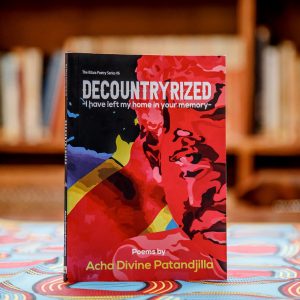
DECOUNTRYRIZED (I HAVE LEFT MY HOME IN YOUR MEMORY) by Acha Divine Patandjilla
UGX20,000DECOUNTRYRIZED is a tale of a lonely African soul seeking refuge from war. Having left her country as a child in search for peace, Acha and her family eventually settled in Uganda and this is where Acha tells her story. The poems are a painful reminder of the effects of war on Africa’s children but the books also filly the reader with hope that someday peace shall be achieved and the writer and her family will be able to go back and settle home.


Reviews
There are no reviews yet.